

Sliven online

Home
Categories
Други категоризации
News sites
News sources
- Bishopric Sliven
- Central Heating-Sliven
- Chamber-Sliven
- DBT Sliven
- DataMplant
- District Sliven
- GPZE "Zahari Stoyanov"
- HS "E. Bagryana" (XII)
- HS "Y. Yovkov" (X)
- Humanitarian School
- Job ads – Sliven
- MBAL Sliven
- MKBPPMN Sliven
- Med. center Mirkovich
- Municipal Council-Sliven
- Municipality Sliven
- OS "P. Hitov"
- PHSME Sliven
- PIC - Sliven
- PPZC - Sliven
- REDC
- Reg.Hist.Museum-Sliven
- SBR Kotel
- Sports School "D. Rohov"
- Textile and Garment Mag.
- Tuida News
- UTRLVK - Sliven
- Water and Canal Sliven
Search
Translator
RSS
Sliven. News from the source. Last news
MEPs warn against expanding performance-based funding in the next EU long-term budget
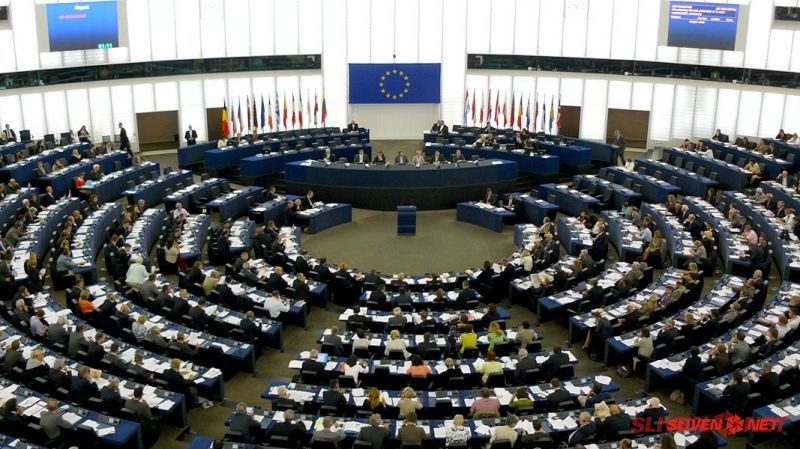
Expanding performance-based EU funding without safeguards increases the risk of fraud, double funding, and errors
Limit the use of financing not linked to costs to smaller projects while keeping large and complex investments cost-based
Democratic accountability must be preserved, with stronger parliamentary scrutiny and complete transparency on final beneficiaries
Budgetary control MEPs are concerned about plans to expand the use of performance-based funding - where payments are not linked to actual costs incurred - in the next long-term EU budget.
In a draft report endorsed on Thursday by 22 votes to four, with one abstention, Budgetary Control committee MEPs argue this approach increases the risk of errors, double funding and fraud, and should only be used under strict conditions and robust safeguards.
As the Recovery and Resilience Facility (RRF) was the first performance-based instrument at the EU level - with payments linked to the achievement of milestones and targets rather than the reimbursement of eligible costs - the report identifies the risks and weaknesses identified so far with this approach. These include reduced accountability and limited EU-level oversight of compliance with rules and regulations, insufficient transparency regarding the final recipients, a limited number of cross-border projects weakening EU added value, and the inadequate involvement of local and regional authorities in decision-making.
MEPs also note with concern that, at the end of 2024, the European Public Prosecutor’s Office (EPPO) was handling 307 active cases linked to the RRF. The estimated damage to the EU’s financial interests amounts to EUR 2.8 billion, representing around 30% of all detected EU expenditure fraud.
Limit the scope, build capacity
Committee MEPs argue that financing not linked to costs should only be used for smaller beneficiaries implementing projects below defined financial thresholds, while large-scale and complex projects should remain cost based. They insist that it should be the Commission that assesses whether milestones and targets triggering EU payments have been fulfilled. Moreover, they stress that the achievement of milestones and targets must be directly linked to the implementation of concrete projects delivering measurable results and contributing to EU policy objectives.
MEPs underline that any shift towards performance-based delivery models requires substantial capacity building at both EU and national levels, as monitoring, control and audit requirements differ significantly from those used for traditional cost-based instruments.
Do not jeopardise democratic accountability
The draft report warns that the generalised use of financing not linked to costs reduces the transparency and traceability of EU funds and could ultimately hinder Parliament’s ability to scrutinise EU budget implementation. MEPs caution that expanding these instruments without stronger parliamentary oversight risks shifting institutional balances towards executive discretion.
They insist that any governance model for performance-based instruments must fully involve Parliament and the Council on equal terms, and be accompanied by strengthened monitoring, reporting and transparency provisions.
Quote
“Europe’s budget is not a cash machine where money is simply taken from and disappears. It is a promise to deliver tangible results and real-life impact. Performance-based budgeting can speed up necessary reforms, but it must never weaken accountability. When payments are decoupled from real costs, transparency and value for money are harder to prove. In the age of digitalisation, there is no excuse for blind spots: modern, interoperable solutions must make cash flows visible and auditable, with clear criteria for payment triggers, complete audit trails, and real-time traceability to final recipients, including contractors and subcontractors, so every euro can be traced, checked and justified”, rapporteur Monika Hohlmeier (EPP, DE) said after the committee vote.
Next steps
This own-initiative report will be put to a vote at one of the European Parliament’s upcoming plenary sessions.
Background
Performance-based instruments are reshaping the way the European Union finances its policies. By linking payments to the achievement of milestones and targets rather than to the reimbursement of eligible costs, they aim to accelerate reforms and strengthen the focus on results. The RRF was the first large-scale application of this model, and the Commission has proposed to extend it more widely through National and Regional Partnership Plans in the next Multiannual Financial Framework.
While this approach offers advantages - such as simplified procedures and a stronger focus on outputs - it also introduces significant risks for control, transparency and accountability. The European Court of Auditors has identified weaknesses in the RRF control system, including incomplete audit trails, heavy reliance on national authorities and uneven control quality across Member States.