

Sliven online

Начало
Категории новини
Други категоризации
Новинарски сайтове
Източници на новини
- Бюро по труда-Сливен
- ВиК-Сливен
- ДейтаМплант
- МБАЛ "Д-р Ив.Селимински"
- МКБППМН Сливен
- Мед. център Миркович
- Митрополия Сливен
- ОУ "Е. Багряна" (XII)
- ОУ "П. Хитов" (VII)
- ОбСНВ, ПИЦ-Сливен
- Област Сливен
- Община Сливен
- Общински съвет - Сливен
- Обяви за работа – Сливен
- ПГ по Механотехника
- ПГПЗЕ "Захарий Стоянов"
- ППЗЦ - Сливен
- ПХГ "Дамян Дамянов"
- РЦИР
- Регион.Ист.Музей-Сливен
- СБР - Котел
- СУ "Й. Йовков" (X)
- Сп. "Текстил и облекло"
- Спортно у-ще "Д. Рохов"
- ТПП-Сливен
- Топлофикация-Сливен
- Туида Нюз
- ЮТРЛВК - Сливен
Търсене
Преводач
RSS
Сливен. Новини от източника. Последни новини
MEPs demand stronger rule of law safeguards and more transparency in 2024 discharge resolution
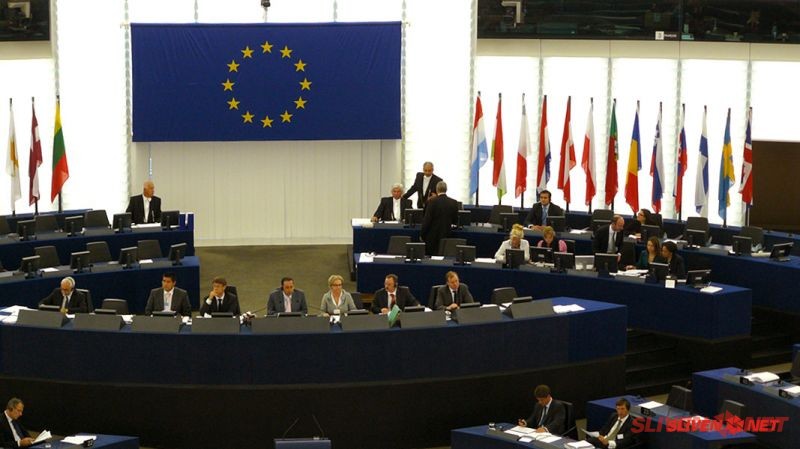
Commission should be tougher on rule of law issues
Lower error rates no proof of improved management
Final beneficiaries of Recovery and Resilience Facility (RRF) to be disclosed
The Budgetary Control Committee recommends granting the Commission discharge for 2024, but warns that rule of law backsliding in several member states harm the sound management of EU funds.
By 18 votes in favour to 10 against, the European Parliament’s Budgetary Control Committee recommended on Tuesday that Parliament grant discharge to the European Commission budget for the 2024 financial year. In separate votes, committee MEPs also suggested granting discharge to all the EU agencies.
Call for rule of law action
In the resolution accompanying the discharge decision (adopted by 21 votes in favour and seven against), MEPs point to ongoing rule of law backsliding, systemic corruption and attacks on fundamental rights in several member states that have a direct impact on the sound management of EU funds. To address the risks, MEPs want the Commission to move beyond monitoring and make full use of the instruments at its disposal, including the full suspension of EU funds. Rule of law provisions should also apply to third countries participating in EU programmes, they argue.
No all-clear despite lower error rate
Welcoming a reduced error rate (the share of payments that was not made in full compliance with the applicable EU rules) - from 5.6% in 2023 to 3.6% in 2024 - committee MEPs warn this decline does not necessarily reflect improved financial management. The improvement, they say, could also be traced to factors like the end of COVID-19 emergency spending and a comparatively low level of budgetary implementation in 2024. They also point to the still-worrying error level affecting cohesion spending (5.7%, down from 9.3% in 2023). They are concerned about proposals to introduce a new spending model under the EU’s next long-term budget that would rely even more on member state control systems, even though the persistently high error rates have not been adequately tackled.
Overestimation of climate spending
The resolution points to several reports by the European Court of Auditors showing that the positive climate effects of EU spending have been systematically overestimated by the Commission. To maximise the impact of EU climate and biodiversity funding, MEPs call for improved monitoring and reporting of results.
RRF: transparency and traceability are missing
In line with previous warnings, MEPs are concerned about the lack of reliable and complete information on final recipients of the Recovery and Resilience Facility’s (RRF) funding. They say the Commission’s interpretation of the concept of “final recipient” contradicts the existing legislation, and wants the Commission to publish the list of final recipients and contractors across all instruments in a harmonised, machine-readable format. MEPs warn that all appropriate measures within the EP prerogatives - including legal action - would be considered should the Commission fail to provide access to this information.
Quote
Rapporteur Daniel Freund (Greens/EFA, DE) said: “Today, the European Parliament sent a clear and unequivocal message on accountability and the rule of law through its decision on the European Commission’s 2024 budget discharge. On the Recovery and Resilience Facility, we made it clear that ongoing transparency failures are unacceptable. The Commission must provide a complete list of final recipients by 31 December - or face legal action. We also secured a significant step forward in addressing rule of law concerns in Slovakia. Parliament calls on the Commission to trigger the rule of law conditionality mechanism to safeguard EU funds from misuse. On Hungary, Parliament went further than ever before, calling for the full suspension of EU funds unless there is tangible progress on the rule of law. These decisions underline our firm commitment to upholding EU values and protecting taxpayers’ money."
Next steps
Parliament is set to vote on all the discharge decisions and accompanying resolutions during its April plenary session in Strasbourg.
Background
The EU’s “discharge procedure” is a key mechanism through which the European Parliament exercises democratic oversight over the budget’s implementation. It serves to hold the European Commission and other EU institutions accountable for the management of EU funds.
On the basis of reports from the Commission and the European Court of Auditors (ECA), the Parliament’s Committee on Budgetary Control (CONT) reviews the implementation of the EU budget in a given financial year and holds hearings with the relevant officials. CONT then recommends whether to grant or refuse budgetary “discharge” and provides observations and recommendations in the form of a resolution. The plenary votes to approve or reject these decisions. Refusal of discharge can result in remedial action, stricter financial controls, or political consequences.