

Sliven online

Начало
Категории новини
Други категоризации
Новинарски сайтове
Източници на новини
- Бюро по труда-Сливен
- ВиК-Сливен
- ДейтаМплант
- МБАЛ "Д-р Ив.Селимински"
- МКБППМН Сливен
- Мед. център Миркович
- Митрополия Сливен
- ОУ "Е. Багряна" (XII)
- ОУ "П. Хитов" (VII)
- ОбСНВ, ПИЦ-Сливен
- Област Сливен
- Община Сливен
- Общински съвет - Сливен
- Обяви за работа – Сливен
- ПГ по Механотехника
- ПГПЗЕ "Захарий Стоянов"
- ППЗЦ - Сливен
- ПХГ "Дамян Дамянов"
- РЦИР
- Регион.Ист.Музей-Сливен
- СБР - Котел
- СУ "Й. Йовков" (X)
- Сп. "Текстил и облекло"
- Спортно у-ще "Д. Рохов"
- ТПП-Сливен
- Топлофикация-Сливен
- Туида Нюз
- ЮТРЛВК - Сливен
Търсене
Преводач
RSS
Сливен. Новини от източника. Последни новини
MEPs debate state of the EU: economy, security, climate, AI, social media
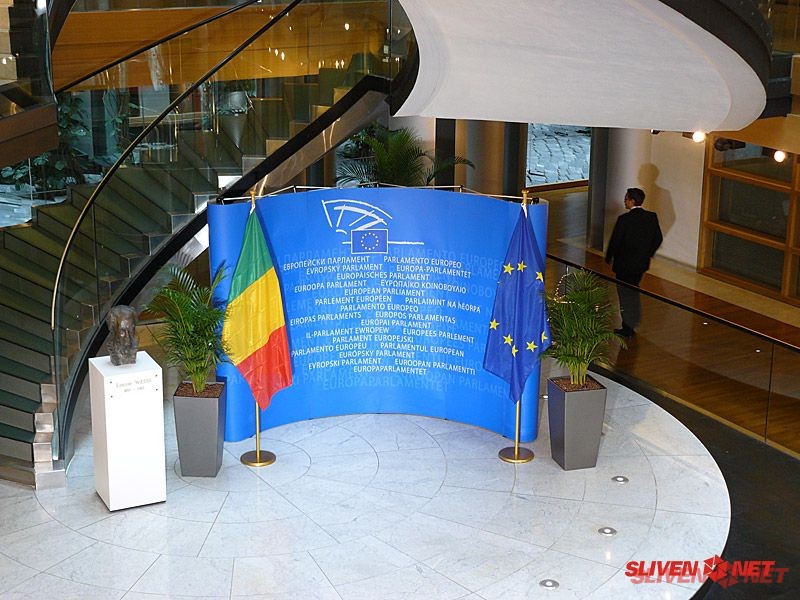
In the annual State of the European Union debate, MEPs and President von der Leyen discussed the Commission’s work over the past year and the EU’s most immediate challenges.
Opening the debate, Parliament President Roberta Metsola said: “Our Union has always moved forward because people were willing to take a leap when the moment demanded it and turn uncertainty into possibility. People expect a Union that does more to protect them, support them and fight their corner – on security, competitiveness, affordable homes, quality jobs, climate and borders. They want a Europe that stands proudly on its own two feet and proudly for its values. This is the moment for courage, ambition and results.”
“The state of our Union is the strongest it has ever been. The state of our Union can also feel as precarious as it has ever been”, said Commission President Ursula von der Leyen. She stressed that kickstarting Europe's economy is our number one priority, pointing to the One Europe, One Market Roadmap, and stating that by the end of next year, “we can and must complete this historic overhaul of the single market”.
“Our future prosperity and security will greatly depend on how we manage the tipping points of our time: climate change and AI”, she said, stressing that “Europe can, must and will stay the course on our climate targets”. She announced that the Commission will present a new framework for climate resilience, a climate insurance alliance, a European heatwave plan and a European water initiative.
On AI, Ursula von der Leyen highlighted that Europe needs to massively boost its computing capacity and develop new ways to use public and private funds to invest in the most promising European start-ups and companies. In health, transport, agri-food, advanced manufacturing, and defence and space, industrial AI has the biggest potential, she said, going on to announce that the Commission would soon present “game-changing initiatives across these sectors”.
Speaking about the fractured international rules-based system, the Commission President said that “we must urgently reimagine our partnerships”. Addressing Canada’s Prime Minister Mark Carney in the chamber directly, she said: “I would like to work with you on opening the door for Canada to be the first associate member of the EU”.
Speaking about security and the hybrid threats Europe is facing, von der Leyen said that Europe needs an emergency security protocol to coordinate the European response, to deter further escalation and to mitigate the impact. Given the nature and scale of the risks at play, she announced that the Commission will present its ideas “to make a European security council a reality.” On Russia’s war of aggression against Ukraine, she reiterated the EU’s unwavering support for Ukraine and said that the EU will tighten its sanctions on Russia.
Referring to the events in Ceuta over the summer, von der Leyen said that “Ceuta’s border is a European border. Because Ceuta is Spain. Ceuta is Europe. And Europe will be there for you.” She also pointed to the 55% reduction in illegal arrivals over the past two years and the further 35% drop this year. “The message from Europe is clear: we will always comply with our values and fundamental rights. But we will never compromise on protecting our borders.”
On social media, von der Leyen announced the proposal for an EU Kids Act, to be unveiled tomorrow. “No social media under the age of 13. No personal account under the age of 15”. From 13 until a child turns 15, only mini accounts would be set up and supervised by parents, with limited features and a time restriction to one hour a day. And between 15 and 18, safe design will be an obligation for the platforms. ”Europe has the power to act. It is we who decide our rules, not big tech”, von der Leyen said.
Political group speakers
Manfred Weber (EPP, DE) said Europe is being hit by three major shocks: rapid technological change driven by AI, a profound geopolitical shift, and growing economic insecurity reflected in the loss of industrial jobs. He argued that Europe must respond by listening to, not lecturing, citizens, and by pursuing pragmatic policies, including on climate and the car industry. He endorsed President von der Leyen’s proposal to strengthen protection for children online and called for much deeper European cooperation on defence, including a single market for armaments, joint command structures, drones and satellites. On the economy, Weber urged stronger investment in AI and competitiveness, and backed a robust long-term EU budget (MFF). Trade agreements such as CETA, he said, are not only about market access but also about building alliances in a changing world order.
Iratxe García (S&D, ES) called on the EU “to be brave”, in the fight against climate change and to put an end to dependence on fossil fuels from autocratic regimes. The European project “will not survive if our citizens cannot live with dignity”, she said, calling for the Affordable Housing Act to be passed, as well as for legislation on quality jobs. García demanded a guarantee for women’s rights. She also insisted that EU borders must be defended “without abandoning our values”. She called for the suspension of the EU-Israel association agreements and for the confiscation of Russian frozen assets. On the EU budget, she underlined that “we cannot do more with less”. García concluded that “21st century Europe will only be possible if pro-European forces work together, not looking to the far-right”.
"There are now, in 2026, two Europes" declared Jordan Bardella (PfE, FR). "There is the Europe of those who write the rules, of bureaucrats who waste public money and who invent tomorrow's taxes (...) and then there is the Europe of those who have to pay." He denounced, with the ETS2 legislation, the "unbearable battering of the middle and working classes" and added that Europe "is also protecting less and less", highlighting the situation in Ceuta. "The peoples of Europe are waiting for just one thing: for you to protect our borders," he declared. On economic policy, Bardella denounced "the great European paradox": "We regulate what we no longer know how to manufacture, and we import what we have ourselves forbidden to produce (...) let us finally embrace European preference in public procurement," he declared.
Patryk Jaki (ECR, PL) said excessive EU bureaucracy is continuing to hamper growth and innovation. He called for measures to protect citizens and businesses from rising energy prices, including by reviewing green policies that, in his view, increase costs and hinder competitiveness. On migration, Jaki demanded stricter implementation of existing rules and more resources for border management and the protection of EU borders. He also criticised plans to restrict young people’s access to social media, arguing that young people need greater economic stability, quality jobs and decent living conditions rather than restrictions on their online and offline freedom.
Valerie Hayer (Renew, FR) called for a new vision for the European Union, and for pro-European radicalism. She demanded European laws on climate resilience and risk management, as well as investment in innovation, and global leadership for an AI legal framework. Europe must show strength in standing up to Russia and continue supporting Ukraine, she said. The EU needs to increase its sphere of influence and become a safe haven for the democrats of the world, Hayer added. She concluded by calling for an ambitious budget that will deliver for citizens.
Terry Reintke (Greens, DE) stressed that Europe was already in a climate emergency and accused EU leaders of failing to respond adequately to this summer’s wildfires, heatwaves and heat-related deaths. She criticised efforts to weaken the Green Deal and announced that her group would seek an inquiry committee into shortcomings in enforcing agreed EU climate legislation. Reintke called for a clear timetable for phasing out fossil fuels, a windfall-profit tax to make polluters pay, and a properly funded climate adaptation plan in the next EU budget. She called on Europe to act with greater confidence against what she described as powerful opponents, including Donald Trump, tech oligarchs and Vladimir Putin.
"A full tank of petrol already exceeds €100 and millions of people have to choose between eating, housing themselves and getting around," declared Manon Aubry (The Left, FR). She called for a price freeze and for a "tax on the superprofits of oil companies." Aubry denounced the Commission's "vast deregulation agenda." "You prefer the scorched-earth policy that designates ecology as the enemy rather than a profound transformation of economic models," she complained. Aubry criticised the absence of a "democratic and popular mandate" to establish a European security council and a special relationship with Canada. She also denounced the absence of sanctions against Israel and the failure to suspend the association agreement in response to the situation in the Gaza Strip.
René Aust (ESN, DE) described the state of the Union as one of lost borders and lost competitiveness. He said that during a seven-week attack on the EU's borders, the situation had been dire, but nothing had been done, and that Europe was no fortress. He called for less bureaucratic structures and red tape, stating that the opposite had been done. Aust welcomed the patriotic parties gaining ground in Europe and working to achieve “the Europe we all want”.