

Sliven online

Home
Categories
Други категоризации
News sites
News sources
- Bishopric Sliven
- Central Heating-Sliven
- Chamber-Sliven
- DBT Sliven
- DataMplant
- District Sliven
- GPZE "Zahari Stoyanov"
- HS "E. Bagryana" (XII)
- HS "Y. Yovkov" (X)
- Humanitarian School
- Job ads – Sliven
- MBAL Sliven
- MKBPPMN Sliven
- Med. center Mirkovich
- Municipal Council-Sliven
- Municipality Sliven
- OS "P. Hitov"
- PHSME Sliven
- PIC - Sliven
- PPZC - Sliven
- REDC
- Reg.Hist.Museum-Sliven
- SBR Kotel
- Sports School "D. Rohov"
- Textile and Garment Mag.
- Tuida News
- UTRLVK - Sliven
- Water and Canal Sliven
Search
Translator
RSS
Sliven. News from the source. Last news
MEPs call for cohesion policy to uphold the ‘right to stay’ in EU cities
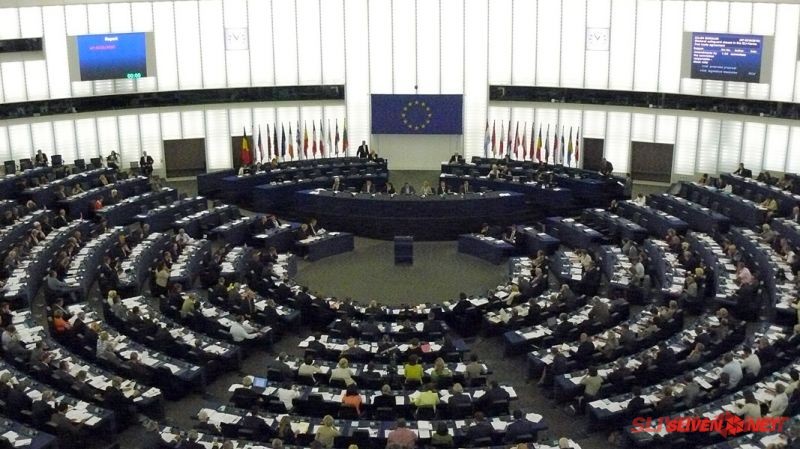
Give cities easier access to funding and a stronger role in setting investment priorities
Use cohesion funding to strengthen climate resilience, urban security and housing affordability
Security-related investment must not replace funding for cities’ socio-economic development
Regional Development MEPs say the ‘right to stay’ must be central to EU cohesion policy, enabling people to live, work and build futures in the places they call home.
In a report adopted unanimously on Thursday, the Committee on Regional Development calls for a cohesion policy that can help cities address rising housing costs, security challenges, unequal access to essential services and natural disasters.
Putting cities at the centre of cohesion policy
The MEPs urge the Commission to build the ‘right to stay’ principle into the 2028–2034 multiannual financial framework (MFF), with cohesion funding to support affordable and sustainable housing, quality jobs, essential public services, transport, healthcare and connectivity, particularly in cities and territories facing demographic decline and depopulation.
Local and regional authorities should be fully involved in defining investment priorities and designing cohesion-funded programmes and the national and regional partnership plans (NRPPs). MEPs also favour simpler access to EU funding for cities, supported by technical assistance, capacity-building and reduced administrative burdens, particularly for small and medium-sized cities, as well as stronger dialogue between EU institutions and cities to identify implementation barriers and adapt EU policies to local needs.
Strengthening urban climate resilience and security
To help cities respond to increasingly frequent extreme weather events and rising temperatures, MEPs call for greater cohesion investment in nature-based solutions, resilient infrastructure and climate adaptation.
They also propose using cohesion funds to support urban civil preparedness and resilience, including infrastructure and systems needed to respond to crises, while ensuring that security-related investment does not replace funding for the socio-economic development of cities and regions.
Balancing housing affordability and sustainable tourism
The text highlights the role that cohesion policy can have in helping cities address the housing crisis by supporting affordable, sustainable and energy-efficient housing, including social and public housing, renovation, urban regeneration and the reuse of vacant or abandoned buildings.
The MEPs also support a sustainable approach to tourism, helping local tourism ecosystems while protecting residents’ quality of life, taking local circumstances and the competences of national, regional and local authorities fully into account.
Quote
Rapporteur Denis Nesci (ECR, IT), said: “Cities must offer people strong roots and real opportunities to build their future. The ‘right to stay’ means ensuring that students, young professionals and families can find affordable housing, reliable transport and essential public services where they choose to live. With predictable cohesion funding beyond 2027 and simpler access to EU support, we can help build cities that are more connected, safe and resilient, while creating the conditions for young people to stay, contribute and seize opportunities in their communities.”
Next steps
The report will be tabled for a vote during Parliament’s November plenary session.