

Sliven online

Home
Categories
Други категоризации
News sites
News sources
- Bishopric Sliven
- Central Heating-Sliven
- Chamber-Sliven
- DBT Sliven
- DataMplant
- District Sliven
- GPZE "Zahari Stoyanov"
- HS "E. Bagryana" (XII)
- HS "Y. Yovkov" (X)
- Humanitarian School
- Job ads – Sliven
- MBAL Sliven
- MKBPPMN Sliven
- Med. center Mirkovich
- Municipal Council-Sliven
- Municipality Sliven
- OS "P. Hitov"
- PHSME Sliven
- PIC - Sliven
- PPZC - Sliven
- REDC
- Reg.Hist.Museum-Sliven
- SBR Kotel
- Sports School "D. Rohov"
- Textile and Garment Mag.
- Tuida News
- UTRLVK - Sliven
- Water and Canal Sliven
Search
Translator
RSS
Sliven. News from the source. Last news
The EU must support Greenland in the face of direct threats to its sovereignty
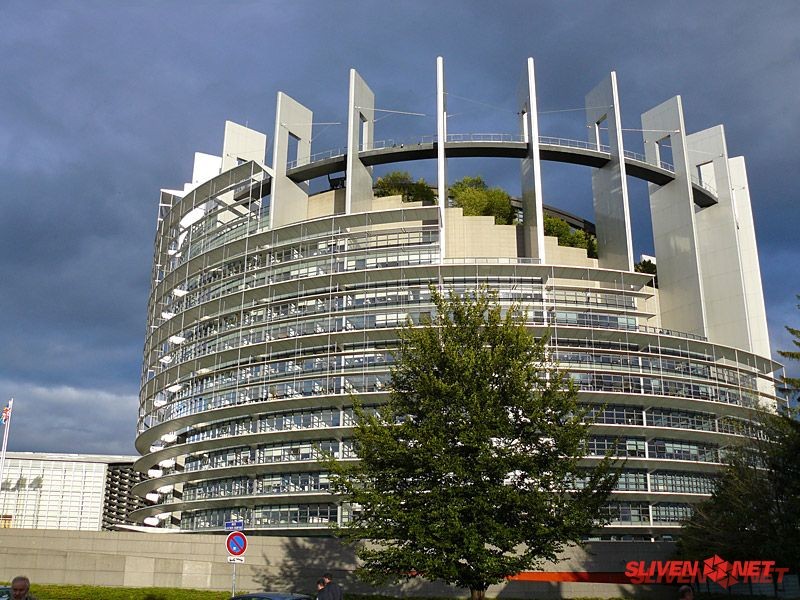
EU support for Greenland in tackling geostrategic challenges essential
More funding needed for Overseas Countries and Territories (OCTs)
Local communities to be consulted on decisions related to critical raw materials
In adopting a report on the EU’s relationship with its overseas countries and territories Committee on Development MEPs demand more funding, democratic oversight, and scrutiny.
The report, on amending the EU Council’s decision on the EU-Association of the Overseas Countries and Territories (OCTs), including Greenland (DOAG), is Parliament’s response to a 2025 Commission proposal to update the DOAG to align it with the EU’s next long-term budget. MEPs adopted their position on the DOAG on Monday 5 October with 17 votes in favour, two against and two abstentions.
Sovereignty and self-reliance
The decision, originally adopted by the Council in 2021, covers 13 OCTs, of which Greenland is one. In their report, Committee on Development MEPs say the purpose of the decision is for the EU enhance the existing ties between the EU and, acknowledging increased geopolitical competition , enhancing existing ties with every OCT, acknowledging their geostrategic positions in the Caribbean, the Indo-Pacific, the Arctic, the Antarctic, and Oceania.
MEPs say the EU should support Greenland in addressing its major challenges, including direct threats to its sovereignty, and the improvement of education and skills levels, economic diversification, trusted and reliable connectivity, infrastructure for sustainable tourism, climate change, and to contribute to the capacity of the administration of Greenland to formulate and implement national policies, while strengthening resilience, self-sufficiency and safeguarding its critical infrastructure.
Funding increase
In addition to facilitating the participation of OCTs in EU funding programmes – including on biodiversity, environmental protection, Horizon Europe, the European Competitiveness Fund, and Erasmus+ - MEPs want to increase the amount of funding proposed by the Commission for the 2028-234 budget cycle from €999 million to €2.084 billion (in current prices).
Democratic oversight
The DOAG should strengthen the role of civil society and local community groups – including those representing young people and indigenous communities – and promote their participation in activities and projects that fall under its remit. MEPs want to ensure the people whose lands, territories, resources, livelihoods or cultural heritage may be directly or indirectly impacted are also engaged prior to investment decisions in relation to mining, extraction and exportation of critical raw materials. Parliament should, MEPs argue, be fully represented in the OCTs-EU forum, which they say should be held annually. MEPs want Parliament to be informed of the discussions between the Commission, OCTs and member states on funding, critical infrastructure resilience, maritime security, and other issues, in the context of the DOAG.
Quote
Speaking after the vote, rapporteur and Committee on Development Chair Barry Andrews (Renew, IE), said: “Given the threats of President Trump to Greenland, we must deepen our relations with the island and make clear that we want, along with all other overseas countries and territories, the closest possible relationship. In various areas such as renewable energy, critical raw materials, research and climate, these countries and territories are crucial partners. Therefore, the parliament is pushing for increased EU funding and support in line with all our strategic interests.”
Next steps
Parliament has the right to consultation on this file. A vote by the whole of the Parliament is expected at a forthcoming plenary session, currently scheduled for 11 November.
Background
The 13 OCTs are not sovereign countries but depend to varying degrees on the three member states with which they maintain special links Six of these are linked to France (French Polynesia, French Southern and Antarctic Territories, New Caledonia, Saint Barthélemy, St. Pierre et Miquelon, Wallis et Futuna Islands), six to the Netherlands (Aruba, Bonaire, Curaçao, Saba, Sint Eustatius Sint Maarten), and Greenland is constitutionally linked to Denmark. The OCTs have been associated with the EU since the entry into force in 1958 of the Treaty of Rome. The key aim is to promote the economic and social development of the OCTs and to establish close economic relations between them and the EU.
The OCTs have wide-ranging autonomy, covering areas such as economic affairs, employment market, public health, home affairs and customs, while defence and foreign affairs usually remain within the remit of the Member States.
On 3 September 2025, the European Commission adopted the proposal for a Council Decision on the association of the OCTs with the EU, including relations between the EU on the one hand, and Greenland and the Kingdom of Denmark on the other (DOAG). This proposal to amend the current Council Decision (EU) 2021/1764 is made in the context of the 2028-2034 multiannual financial framework (MFF).