

Sliven online

Home
Categories
Други категоризации
News sites
News sources
- Bishopric Sliven
- Central Heating-Sliven
- Chamber-Sliven
- DBT Sliven
- DataMplant
- District Sliven
- GPZE "Zahari Stoyanov"
- HS "E. Bagryana" (XII)
- HS "Y. Yovkov" (X)
- Humanitarian School
- Job ads – Sliven
- MBAL Sliven
- MKBPPMN Sliven
- Med. center Mirkovich
- Municipal Council-Sliven
- Municipality Sliven
- OS "P. Hitov"
- PHSME Sliven
- PIC - Sliven
- PPZC - Sliven
- REDC
- Reg.Hist.Museum-Sliven
- SBR Kotel
- Sports School "D. Rohov"
- Textile and Garment Mag.
- Tuida News
- UTRLVK - Sliven
- Water and Canal Sliven
Search
Translator
RSS
Sliven. News from the source. Last news
Weakened EU budget would make local communities more vulnerable to climate change
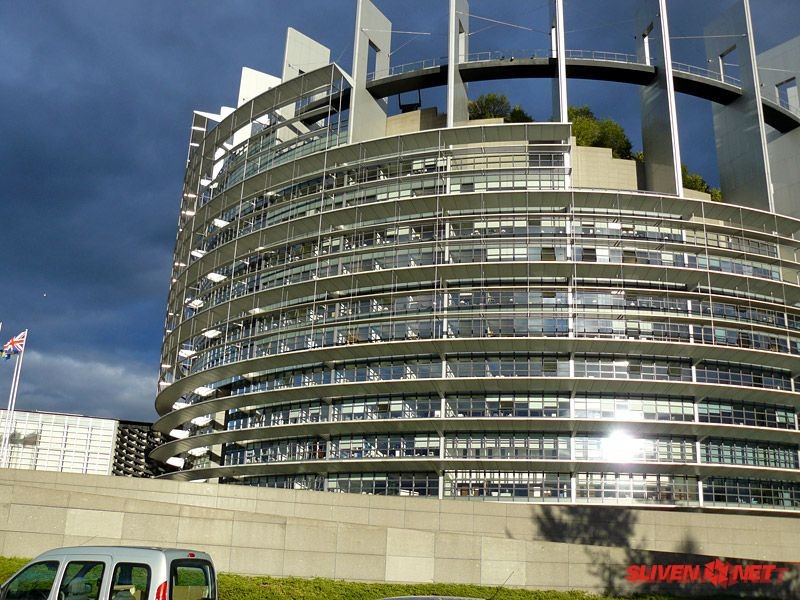
Members of the environment committees of the European Parliament and the Committee of the Regions are meeting today, 12 October, to discuss the EU’s next multiannual budget.
As the negotiations on the European Union’s next long-term budget are entering their final phase, local leaders and MEPs are expected to warn that the proposed cuts in environment and climate funding will seriously undermine regions and cities' capacity to deliver climate action, adapt to the consequences of climate change and protect their citizens against floods, wildfires and heatwaves.
On 10 October the Irish Presidency of the Council of the EU presented a new so-called “negotiation box” that serves as starting point for the discussions of heads of state or government gathering in Brussels on 15-16 October to discuss the EU's multiannual financial framework (MFF) for 2028-2034. The negotiating box contains significant cuts across budget lines, including environment and climate funding under National and Regional Partnership Plans (NRPP) and the European Competitiveness Fund (ECF).
At today's joint meeting of the European Parliament's ENVI Committee and the European Committee of the Regions' ENVE Commission, members of both institutions are expected to express their concerns about the cuts, the ambiguity of the objectives and definitions, the lack of strong territorial ownership, unclear allocation of responsibilities, and the scrapping of a stand-alone LIFE programme dedicated for environmental action.
The European Commission's MFF proposal sets a general minimum target of 35% for climate- and environment-related spending – including up to 43% in the National and Regional Partnership Plans (NRPP) and in the European Competitiveness Fund (ECF). However, there is no dedicated programme focused exclusively on environment and climate action and accessible to local and regional stakeholders, such as LIFE in the current budget term.
This summer's extreme weather events have again shown that the acceleration of climate change is making heatwaves, droughts, floods and wildfires increasingly frequent and violent across Europe. Today, the Committee of Regions published its annual report on the state of regions and cities 2026, which recalls that every euro spent in adaptation action can generate up to €10 in benefits. In April 2026, the European Parliament called for the continuation of current actions in nature conservation, biodiversity restoration, climate adaptation, pollution prevention and environmental governance under the next MFF, with dedicated funding of €3 billion over the budgetary period in 2025 constant prices.
Quotes
Pierfrancesco Maran (IT/S&D), Chair of Parliament’s committee on Environment, Climate Change and Food Safety said: "The next MFF must allow us to navigate challenging times and prepare for the future. The proposed cuts go in the opposite direction: they would make our communities and territories more vulnerable. Every euro invested in resilience and adaptation brings back up to ten euros in returns, and that is the logic we should follow in the next long-term budget. Resilience must be built into every programme the EU finances, so that what we invest today protects our communities tomorrow. This means keeping the target of a minimum of 35% of funding for climate and environmental action, and ensuring this is reflected in the whole MFF, in a more ambitious budget. Biodiversity also needs dedicated and predictable funding. The Environment Committee is committed to ensuring that the EU's next long-term budget prepares us for the priorities and challenges of the 21st century."
Kostas Bakoyannis (EL/EPP), Chair of the CoR’s ENVE Commission and Member of Athens City Council said: "Cohesion policy is not a side issue: it is a core pillar of a stronger, more united and more competitive Europe. As negotiations on the EU’s next long-term budget enter a decisive phase, we must be clear: cutting cohesion policy funding would weaken Europe’s ability to respond to the climate crisis where it matters most — in our cities, regions and communities.
“We want to see an EU budget that protects robust funding for regions and cities, secures a real role for local and regional authorities in the National and Regional Partnership Plans, and preserves dedicated support for climate and environmental action close to citizens."