

Sliven online

Home
Categories
Други категоризации
News sites
News sources
- Bishopric Sliven
- Central Heating-Sliven
- Chamber-Sliven
- DBT Sliven
- DataMplant
- District Sliven
- GPZE "Zahari Stoyanov"
- HS "E. Bagryana" (XII)
- HS "Y. Yovkov" (X)
- Humanitarian School
- Job ads – Sliven
- MBAL Sliven
- MKBPPMN Sliven
- Med. center Mirkovich
- Municipal Council-Sliven
- Municipality Sliven
- OS "P. Hitov"
- PHSME Sliven
- PIC - Sliven
- PPZC - Sliven
- REDC
- Reg.Hist.Museum-Sliven
- SBR Kotel
- Sports School "D. Rohov"
- Textile and Garment Mag.
- Tuida News
- UTRLVK - Sliven
- Water and Canal Sliven
Search
Translator
RSS
Sliven. News from the source. Last news
MEPs and regions push for greater local involvement in the future Cohesion Policy
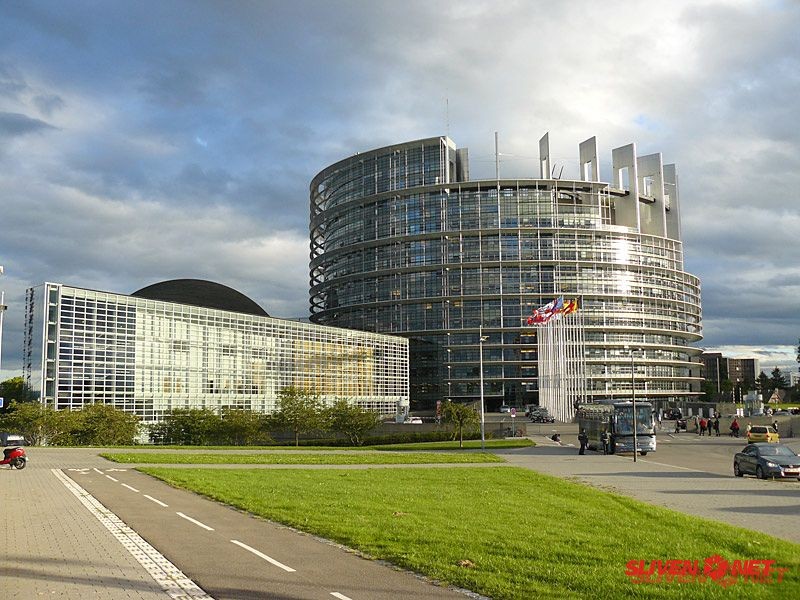
At the 2026 REGI–COTER meeting, MEPs and regional representatives stressed that cities and regions must be central to shaping and delivering EU’s priorities for the next budget.
The joint meeting took place as European heads of state and government are gathering in Brussels for a European Council meeting that has negotiations on the future EU budget 2028-34 at its core. The proposals under discussion among EU institutions on the post-2027 Cohesion Policy framework include the creation of National and Regional Partnership Plans (NRPPs), and updated rules for the European Regional Development Fund (ERDF), the Cohesion Fund and Interreg.
Dragoș Benea (S&D, RO), Chair of the European Parliament’s Committee on Regional Development (REGI), said: “The debate on the future of the European budget is not just a technical one. It is a debate about what kind of Union we want to build after 2027 and how we create synergies between competitiveness, security and solidarity. At a time of deep transformation, regions must not simply be the recipients of decisions taken at national or European level. They must be active partners in shaping and building our common future. If we want a more competitive, secure and resilient Europe, we must invest in our territories and put regions at the heart of decision-making.
Vasco Alves Cordeiro (PES, PT), Chair of the European Committee of the Regions’ Commission for Territorial Cohesion Policy and EU Budget (COTER), said: "Cohesion Policy remains the Union's foremost long-term investment instrument, and its strength rests on three inseparable principles: partnership, the place-based approach and multilevel governance. Merging more than 400 programmes into 27 national plans that make regions and cities expendable risks severing the link between the Union and its citizens. Regions and cities drive nearly half of public investment in Europe; they must therefore co-design and implement the National and Regional Partnership Plans, not merely be consulted afterwards. We call on the Commission to make multilevel governance a binding condition for approving these plans, so that every territory can shape its own development.
In his intervention, European Commission Executive Vice-President for Cohesion and Reforms Raffaele Fitto said that the future Cohesion Policy structure should reflect the need to adapt to emerging challenges and new priorities, including housing, energy, climatere silience and dual-use infrastructure.He recalled the recently launched strategies for cities, eastern border regions, islands and outermost regions, as well as the upcoming strategy on the “right to stay”, expected early next year, which aims to ensure that people can remain in and build their future in the places they call home. Reacting to concerns from REGI and COTER members on the need to strengthen regional involvement within the NRPPs, Fitto agreed that while there are several provisions in the new proposal where their role is defined, more work has to be done to "strengthen" this part within the future negotiations among EU institutions.
REGI and COTER members, who are responsible for Cohesion Policy within their respective EU institutions, underlined that an over-centralisation of decisions on territorial investments in the hands of national governments would weaken the effectiveness of Cohesion Policy in tackling disparities. They called for greater clarity and legal guarantees on the involvement of local and regional authorities in the future NRPPs. They also stressed that competitiveness and cohesion should be considered as fully complementary, as demonstrated by the fact that more than 58% of cohesion policy funding 2021-27 (EUR 220 billion) is allocated to meet the goals of the EU Competitiveness Compass.