

Sliven online

Home
Categories
Други категоризации
News sites
News sources
- Bishopric Sliven
- Central Heating-Sliven
- Chamber-Sliven
- DBT Sliven
- DataMplant
- District Sliven
- GPZE "Zahari Stoyanov"
- HS "E. Bagryana" (XII)
- HS "Y. Yovkov" (X)
- Humanitarian School
- Job ads – Sliven
- MBAL Sliven
- MKBPPMN Sliven
- Med. center Mirkovich
- Municipal Council-Sliven
- Municipality Sliven
- OS "P. Hitov"
- PHSME Sliven
- PIC - Sliven
- PPZC - Sliven
- REDC
- Reg.Hist.Museum-Sliven
- SBR Kotel
- Sports School "D. Rohov"
- Textile and Garment Mag.
- Tuida News
- UTRLVK - Sliven
- Water and Canal Sliven
Search
Translator
RSS
Sliven. News from the source. Last news
Parliament refuses discharge to the Council
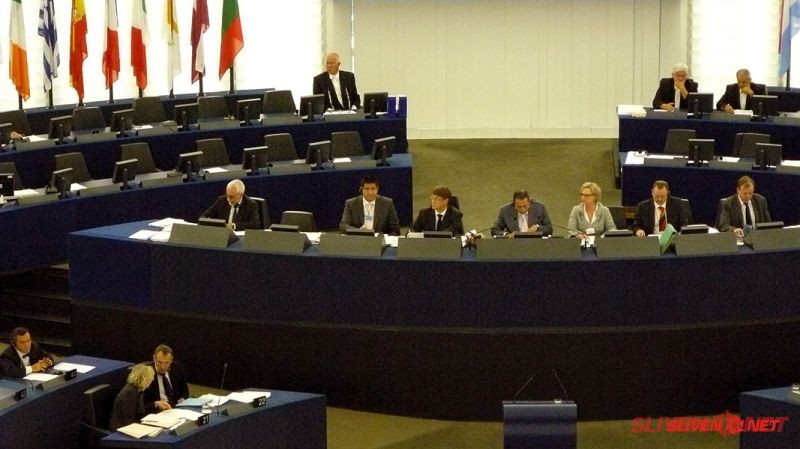
Revisiting a postponed decision, MEPs refused discharge to the Council for its management of the 2024 EU budget.
The plenary decided to refuse discharge by show of hands.
Parliament has refused discharge to the Council for every financial year since 2009. In the accompanying resolution, adopted by 434 votes to 203, with 21 abstentions, MEPs regret the Council’s refusal to cooperate with Parliament on the discharge procedure. This prevents Parliament from taking an informed decision based on thorough scrutiny of the implementation of the Council’s budget.
MEPs call for better interinstitutional cooperation within the existing treaty framework. They also say that a future revision of the treaties should explicitly empower Parliament to grant discharge individually to all EU institutions.
In April 2026, Parliament approved the management of the 2024 EU budget by all the EU institutions and bodies it had scrutinised, postponing only the decision on the Council.
Background
The EU’s “discharge procedure” is a key mechanism through which the European Parliament exercises democratic oversight over the implementation of the EU budget. It holds the European Commission and other EU institutions accountable for the management and disbursement of EU funds.
Based on reports from the Commission and the European Court of Auditors (ECA), the Committee on Budgetary Control (CONT) reviews the financial management of the EU budget for a given financial year, examines irregularities, and holds hearings with the relevant officials. CONT then recommends whether to grant or refuse budgetary “discharge”. Parliament as a whole votes on these recommendations. Refusal of discharge can result in remedial action, stricter financial controls or political consequences.