

Sliven online

Начало
Категории новини
Други категоризации
Новинарски сайтове
Източници на новини
- Бюро по труда-Сливен
- ВиК-Сливен
- ДейтаМплант
- МБАЛ "Д-р Ив.Селимински"
- МКБППМН Сливен
- Мед. център Миркович
- Митрополия Сливен
- ОУ "Е. Багряна" (XII)
- ОУ "П. Хитов" (VII)
- ОбСНВ, ПИЦ-Сливен
- Област Сливен
- Община Сливен
- Общински съвет - Сливен
- Обяви за работа – Сливен
- ПГ по Механотехника
- ПГПЗЕ "Захарий Стоянов"
- ППЗЦ - Сливен
- ПХГ "Дамян Дамянов"
- РЦИР
- Регион.Ист.Музей-Сливен
- СБР - Котел
- СУ "Й. Йовков" (X)
- Сп. "Текстил и облекло"
- Спортно у-ще "Д. Рохов"
- ТПП-Сливен
- Топлофикация-Сливен
- Туида Нюз
- ЮТРЛВК - Сливен
Търсене
Преводач
RSS
Сливен. Новини от източника. Последни новини
The Employment and Social Affairs committee adopts its position on a new European Social Fund
Stand-alone programme with a dedicated budget and objectives
Investment in people to ensure equal opportunities
At least 5% of European Social Fund should go to supporting children
Dedicated ESF chapters in the National and Regional Partnership Plans
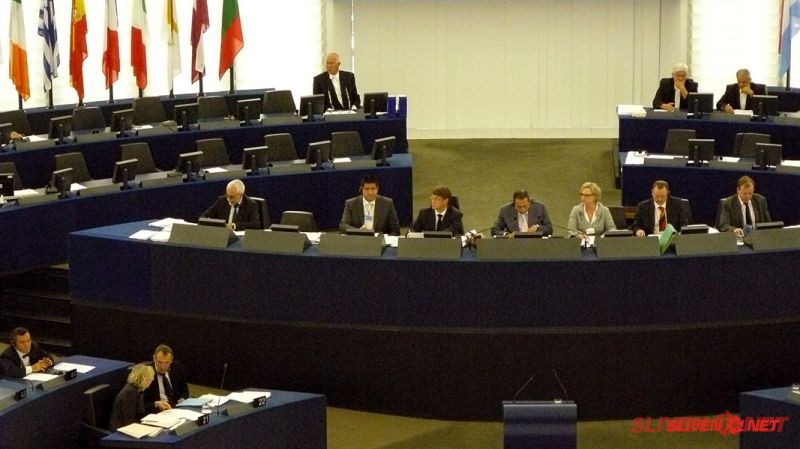
Employment and Social Affairs Committee MEPs voted their position on the 2028-2034 European Social Fund (ESF), aimed at supporting quality employment, skills and social protection.
The Committee suggests retaining the European Social Fund as a stand-alone programme, with a dedicated budget of €124.19 billion, clear objectives and thematic spending requirements. The ESF should continue its role as EU’s main instrument for investing in people, social convergence, quality employment and equal opportunities, MEPs add. Under their proposal, the fund would run through dedicated ESF chapters in the National and Regional Partnership Plans.
The position was approved by 40 votes in favour, 6 against and 10 abstentions.
Investments in people
In order to contribute to the implementation of the European Pillar of Social Rights the ESF should, MEPs argue, support investment in people and policy reforms in employment, skills, including basic skills, education and training and social inclusion. These would ensure equal opportunities, contribute to the eradication of poverty, equal access to the labour market, fair and high-quality working conditions, social protection and inclusion, in particular focusing on quality and inclusive education and training, lifelong learning, investment in children and young people and access to basic services.
Upgraded Child Guarantee
Due to the particular need to support children in poverty and children coming from socio-economically disadvantaged backgrounds, the Committee says member states should programme sufficient, stable, predictable and ring-fenced resources of at least 5% to address the measures under the Child Guarantee, taking into account the needs, gaps and territorial specificities identified at national and regional level.
Support for Member States to invest in their labour markets
Member states should, MEPs say, be able to continue supporting funding for active labour market measures alongside reskilling and upskilling, access to relevant services, especially for people in regions disproportionately affected by decarbonisation to ensure a just transition and member states should allocate an appropriate amount of resources to this challenge.
Quotes
Lead MEP David Casa (EPP, MT) said: “People are Europe’s best resource. And the European Social Fund is our best way of investing in people. Today MEPs have voted for stronger support for our young people, for our workers, and for our children. As families face increasing challenges, Europe needs to ensure an agile workforce, with access to quality education and training. But it also needs to ensure our most vulnerable are not left behind. The return on investment of the Fund is much higher than the cost of doing nothing.”
Lead MEP Marit Maij (S&D, NL) added: “Today’s vote is a clear signal in support of a social Europe. We need a strong European Social Fund with clear priorities and thematic focus on tackling child poverty, fighting youth unemployment, and helping those in need. Europe is more than just a marketplace; it is a society where people integrate and work, and we should support this as a core value of our European project. The Commission’s proposal to abandon the Fund is completely unacceptable, and I will do everything in my capacity to restore it.”
Next steps
Following the adoption of the draft position, committee MEPs also endorsed a mandate for interinstitutional negotiations with the Council, by 41 votes to 14 and 1 abstention. The committee position and the mandate for negotiations are expected to be approved at a forthcoming plenary session. In principle, MEPs can start interinstitutional negotiations once member states have adopted their full mandate, including the overall funding levels for the EU’s long-term budget. For the ESF however, it is particularly important that Parliament first adopts its position on the National And Regional Partnership Plans.
Background
The legislation is part of the EU’s 2028–2034 long-term budget (MFF) package. Parliament wants the budget to remain a strong investment tool that supports citizens, regions and businesses, while delivering clear added value beyond national budgets. MEPs propose increasing the size of the draft budget to meet new challenges and they insist on the importance of new revenue sources to fund an ambitious and sustainable budget. Find out more information.