

Sliven online

Начало
Категории новини
Други категоризации
Новинарски сайтове
Източници на новини
- Бюро по труда-Сливен
- ВиК-Сливен
- ДейтаМплант
- МБАЛ "Д-р Ив.Селимински"
- МКБППМН Сливен
- Мед. център Миркович
- Митрополия Сливен
- ОУ "Е. Багряна" (XII)
- ОУ "П. Хитов" (VII)
- ОбСНВ, ПИЦ-Сливен
- Област Сливен
- Община Сливен
- Общински съвет - Сливен
- Обяви за работа – Сливен
- ПГ по Механотехника
- ПГПЗЕ "Захарий Стоянов"
- ППЗЦ - Сливен
- ПХГ "Дамян Дамянов"
- РЦИР
- Регион.Ист.Музей-Сливен
- СБР - Котел
- СУ "Й. Йовков" (X)
- Сп. "Текстил и облекло"
- Спортно у-ще "Д. Рохов"
- ТПП-Сливен
- Топлофикация-Сливен
- Туида Нюз
- ЮТРЛВК - Сливен
Търсене
Преводач
RSS
Сливен. Новини от източника. Последни новини
Defence innovation: Parliament pushes for more support for SMEs and start-ups
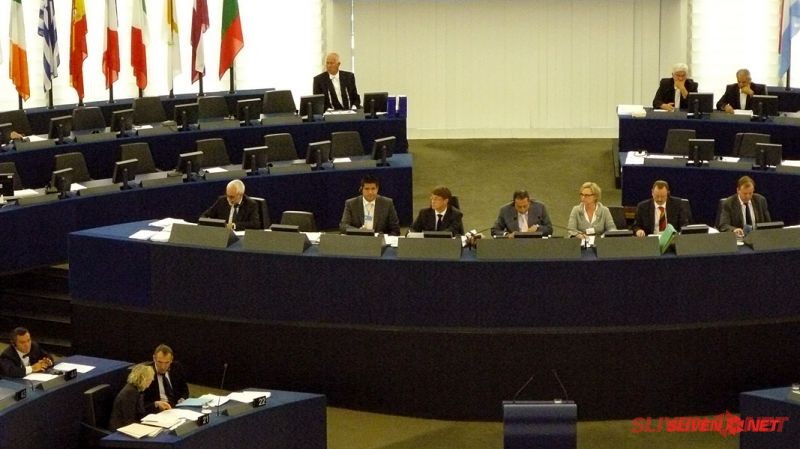
MEPs call on the EU to make it easier for smaller companies to play their part in improving the EU’s defence readiness.
In a report adopted on Thursday, which looks at ways for new EU defence actors to establish themselves and scale up production, Parliament recognises that the EU’s defence start-ups and small and medium sized companies (SMEs) currently face two distinct “valleys of death”. The first is the phase between technological development and capability validation, and the second is stage between validated capability and market adoption. MEPs stress that EU instruments must address both these problem areas and help successful EU-funded projects to obtain their first contracts and secure subsequent procurement by member states’ armed forces. They also underline the importance for smaller defence companies of access to testing facilities, demonstration and validation activities, military end-users, and certification infrastructure.
Parliament accepts that the EU defence market must develop under the principles of fair competition, while recognising the vital role of SMEs, start-ups and small mid-caps as the primary sources of technological dynamism in the European defence technological and industrial base (EDTIB). To this end, MEPs call for better incentives for SME participation in the EU defence market and for action to ease the disproportionate administrative burdens and lengthy funding, testing and procurement procedures facing many smaller and non-traditional defence companies in the EU today.
More support for drones, better access to financing
The text welcomes NATO’s initiative to connect EU defence innovators with civilian companies that have spare production facilities and calls on the European Commission to mirror such initiatives. Given the role and rapid evolution of unmanned aircraft and counter-unmanned aircraft systems in the context of modern warfare, MEPs also call on the EU executive to provide more dedicated support within EU defence programmes for autonomous systems, C-UAS (counter unmanned aerial systems) and next generation drone technologies, once again stressing the role smaller companies can play in this domain.
The report further emphasises the need to improve defence companies’ access to finance, for instance smoothing ways to crowd in private capital, while expressing concern that many European defence actors are forced to sell to non-EU investors or relocate because of a lack of available and willing capital within the EU.
The EU must continue to draw on Ukrainian defence know-how
MEPs welcome successful examples of structured defence innovation cooperation between the EU and Ukraine, including through joint ventures or contracts to facilitate technology exchange and the inclusion of Ukrainian know-how in EU military capabilities. They call on EU member states and the European Defence Agency to draw on Ukraine’s experience in compressing innovation, procurement, certification and capability development timelines when reforming their national defence innovation processes.
The text, prepared by MEPs on the Committee on Security and Defence, was adopted by 411 votes in favour, 133 against, with 41 abstentions.
Quote
“Europe has no shortage of brilliant ideas. What it is short of is the willingness to take risks. Our small companies invent excellent new defence technologies, but too often they never make it into production, or they end up growing in the United States or elsewhere. Our defence systems are still built for yesterday’s wars and are afraid of failure”, said rapporteur Mārtiņš Staķis (The Greens/EFA, Latvia).
“My report proposes simple fixes: give these companies real contracts, give them places to test their products, get EU countries to buy from them together, and stop making them go through 27 different approval processes. If it is invented in Europe, it must be made in Europe, by Europe’s start-ups, for Europe’s security”, he continued.
Background
Despite SMEs providing approximately 70% of the total value of European defence systems and accounting for the majority of firms operating within the EDTIB, they continue to face disproportionate financial, regulatory and political barriers, particularly at national level, to scaling their innovations. Since the first European Defence Fund call in 2021, the EU has only allocated 7% of total financing to project lines linked to “innovation and SMEs”.