

Sliven online

Начало
Категории новини
Други категоризации
Новинарски сайтове
Източници на новини
- Бюро по труда-Сливен
- ВиК-Сливен
- ДейтаМплант
- МБАЛ "Д-р Ив.Селимински"
- МКБППМН Сливен
- Мед. център Миркович
- Митрополия Сливен
- ОУ "Е. Багряна" (XII)
- ОУ "П. Хитов" (VII)
- ОбСНВ, ПИЦ-Сливен
- Област Сливен
- Община Сливен
- Общински съвет - Сливен
- Обяви за работа – Сливен
- ПГ по Механотехника
- ПГПЗЕ "Захарий Стоянов"
- ППЗЦ - Сливен
- ПХГ "Дамян Дамянов"
- РЦИР
- Регион.Ист.Музей-Сливен
- СБР - Котел
- СУ "Й. Йовков" (X)
- Сп. "Текстил и облекло"
- Спортно у-ще "Д. Рохов"
- ТПП-Сливен
- Топлофикация-Сливен
- Туида Нюз
- ЮТРЛВК - Сливен
Търсене
Преводач
RSS
Сливен. Новини от източника. Последни новини
Electricity grids: MEPs reach deal with Council on faster project permitting
Revised rules to speed up permitting for renewable energy projects, electricity grids, storage facilities and recharging stations
Shorter deadlines for addressing clean energy deployment bottlenecks
A single digital portal for all permitting steps
Projects of more than 7 megawatts must share benefits with local communities
The provisional agreement should speed up permitting for electricity grids and renewables projects, to help cut energy prices through the domestic supply of clean energy.
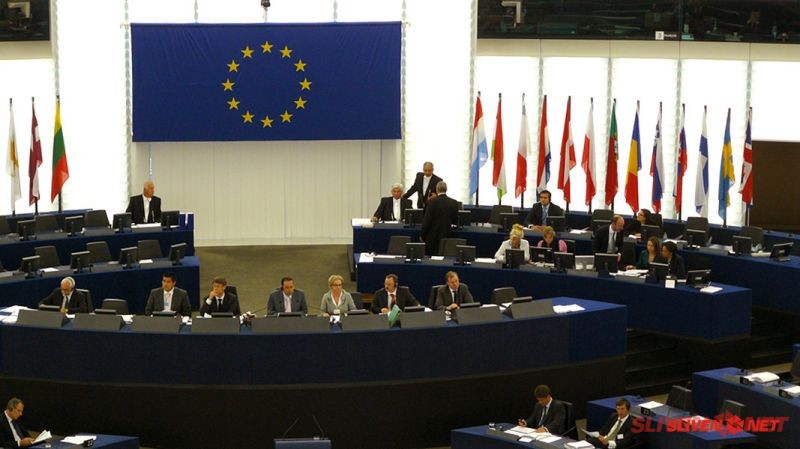
MEPs and the Irish Presidency of the Council reached an agreement on Wednesday night evening on a proposal to speed up the granting of permits for renewable energy projects, electricity grids, storage facilities, and recharging stations across the European Union, as part of the broader European grids package. It introduces shorter deadlines, a single national digital portal for all permitting steps, and a dedicated EU-wide permitting framework for electricity grid infrastructure.
During the negotiations, MEPs pushed to broaden and strengthen the notion that renewable energy and electricity grid projects would be deemed of overriding public interest - thus clearing a number of administrative hurdles in their implementation. Member states will be able to disregard this presumption only in duly justified cases where the conflicting interest is cultural heritage or security and defence.
Shorter deadlines, higher thresholds
The deal shortens project approval deadlines and introduces more transparency for grid connection procedures. Deadlines must not exceed three months for solar energy equipment and co-located energy storage (excluding hydrogen), six months for stand-alone energy storage and recharging stations, to two years for pumped hydropower storage, the text says. Grid connection deadlines will be of three months, to six if duly justified, with a derogation for isolated systems or small connected systems (e.g. in outermost regions).
MEPs managed to raise the grid capacity thresholds over which permits are required, for small-scale solar installations, energy storage (excluding hydrogen) and recharging stations from 100 to 200 Kilowatts. They also ensured that no administrative permits will be needed to install recharging stations with a total installed capacity of 1 megawatt or less on artificial structures.
Sharing the benefits
The threshold for mandatory benefit sharing (the redistribution of economic benefits generated by the project to the local communities hosting or affected by it) is lowered from 10 megawatts to 7 megawatts. Projects carried out by renewable energy communities are exempt from the obligation. Vulnerable customers and people affected by energy poverty may also receive support from Member States.
Quote
“We took a very important step tonight to make sure that we get a faster rollout of renewables and grid infrastructure, to the benefit of our citizens, to mitigate climate change and to boost our competitiveness. I am proud of this result, it shows Europe at its best” said lead MEP Niels Fuglsang (S&D, Denmark).
“From early morning until late at night, from meetings with individuals to companies employing thousands, we hear the exact same message: procedures take too long, and decisions are issued too slowly. Today, we took a step to change that in the energy sector. Acceleration and simplification are not mere political slogans. Progress on digitalisation, faster grid connections for solar panels on Europeans’ rooftops or energy storage systems are examples of concrete results we are delivering for European citizens and businesses.” said ITRE committee Chair Borys Budka (EPP, Poland)
Next steps
The text of the agreement will be put to a vote in the Industry, Research and Energy committee in a forthcoming meeting. It will then have to be endorsed by Parliament as a whole, as well as in Council, before publication in the Official Journal.
Background
Slow and complicated permitting procedures remain one of the main factors causing delays in the development of energy projects across the EU. Electricity transmission grids take around 10 years to complete, of which permitting accounts for more than half the time needed, while permitting of renewable energy projects can still take up to nine years depending on the member state and the technology involved, and storage installations can take from one to seven years.
On 10 December 2025, the European Commission published a proposal to accelerate permit-granting procedures, as part of the European grids package announced under the Competitiveness Compass for the Union and the Clean Industrial Deal.