

Sliven online

Home
Categories
Други категоризации
News sites
News sources
- Bishopric Sliven
- Central Heating-Sliven
- Chamber-Sliven
- DBT Sliven
- DataMplant
- District Sliven
- GPZE "Zahari Stoyanov"
- HS "E. Bagryana" (XII)
- HS "Y. Yovkov" (X)
- Humanitarian School
- Job ads – Sliven
- MBAL Sliven
- MKBPPMN Sliven
- Med. center Mirkovich
- Municipal Council-Sliven
- Municipality Sliven
- OS "P. Hitov"
- PHSME Sliven
- PIC - Sliven
- PPZC - Sliven
- REDC
- Reg.Hist.Museum-Sliven
- SBR Kotel
- Sports School "D. Rohov"
- Textile and Garment Mag.
- Tuida News
- UTRLVK - Sliven
- Water and Canal Sliven
Search
Translator
RSS
Sliven. News from the source. Last news
Justice, anti-corruption and media freedom in Malta: MEPs call for results
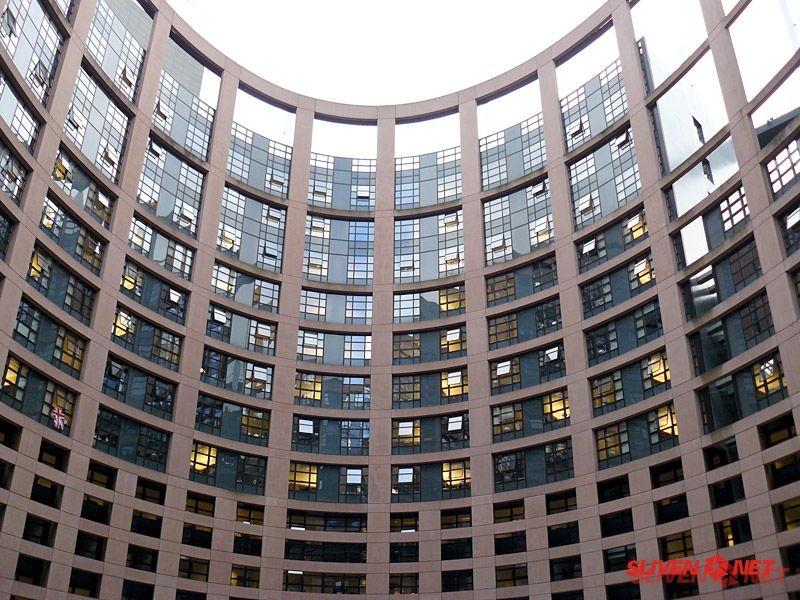
Following the acquittal of the main suspect for the alleged commissioning of Daphne Caruana Galizia’s murder, MEPs travelled to Valletta on 16 - 17 November.
MEPs of the Committee on Civil Liberties, Justice and Home Affairs visited Valletta to discuss the effectiveness of Malta’s justice system and developments pertaining to the rule of law and European values more generally, including the country’s anti-corruption framework, media freedom, and pluralism.
The delegation held exchanges with Prime Minister Robert Abela and senior cabinet members, the Maltese Parliament’s Public Accounts Committee, opposition leader Alex Borg, and representatives of Partit Momentum. MEPs also met Attorney General Victoria Buttigieg, Police Commissioner Angelo Gafà, and representatives of the Chamber of Advocates, the Permanent Commission against Corruption, the Office of the Commissioner for Standards in Public Life and the Financial Intelligence Analysis Unit. They discussed developments with members of Daphne Caruana Galizia’s family and representatives of the foundation set up in her memory and held roundtables with prominent journalists and civil society organisations including Repubblika, Aditus, and Occupy Justice.
Statement
Following the visit, head of delegation and DRFMG Chair Sophie WILMÈS (Renew, Belgium) said: “Nine years after Daphne's assassination, we must ask ourselves a fundamental question: could someone still be assassinated for exposing corruption today? Would a journalist investigating corruption be better protected? Would credible allegations be properly investigated? And would justice be delivered more swiftly? I am afraid that we are still far from being able to give clear and reassuring answers to all these questions. And these questions go far beyond Daphne's case: they concern the rights and freedoms of every citizen in Malta today.
Despite long overdue reforms, including more resources for the judiciary, police and prosecutors, stronger judicial safeguards, modernised court procedures, and improved rules on media freedom and transparency, the delegation emphasises that reforms on paper need to translate into effective prosecutions for corruption, which remain woefully ineffective.
Yet significant challenges remain, including concerning the current jury system that need to be reassessed. The Commission's 2026 Rule of Law Report continues to flag lengthy court proceedings, concerns about the effectiveness of high-level corruption investigations, and the lack of a robust track record of final judgments. Efforts are also needed to strengthen judicial independence, including through reforming the procedure for appointing the Chief Justice.
MEPs welcome the new safeguards for journalistic sources, media ownership transparency and public-service broadcasting, stressing that effective implementation of EU law remains essential. Access to public information, protection against abusive lawsuits - particularly domestic SLAPPs - and the safety of journalists remain serious concerns. As regards the broader media reform, that was triggered upon the publication of the public inquiry more than 5 years ago, the delegation has received no sufficient information to assess its content, but journalists and media organisations have made it clear that expectations are high.
The delegation also calls for better checks and balances. Independent oversight bodies must have the resources and means to carry out their mandates effectively, rules on transparency and conflicts of interest must be strengthened, and civil society and journalists must be meaningfully consulted on reforms affecting their rights.
The 2021 independent public inquiry into the Caruana Galizia assassination, which identified institutional failures and a climate of impunity and whose recommendations also build on recommendations from the Venice Commission, GRECO, Moneyval and the EP, remains wholly or partly unimplemented five years on, MEPs note.
Sophie Wilmès commented: “The independent public inquiry was a turning point. By now, we would have hoped that all its recommendations had been fully implemented. We recognise the progress achieved, but the work remains largely unfinished. This cannot be a mere ticking the box exercise. What matters is a comprehensive response that addresses the underlying institutional failures in the justice system, the protection of journalists and the fight against corruption and delivers lasting change, not simply reforms on paper.”
Recalling the delegation's meeting with Daphne's family and foundation, she added: “Behind every institutional debate and every judicial proceeding, there is a family that has endured an immense loss and has continued to pursue truth and justice with remarkable determination. There is also a population that needs to know it can trust its institutions, that justice will be delivered and that the system as a whole works in the public interest. The European Parliament stands with them. We owe it to Daphne, to her family, to journalists and civil society, and to all Maltese and European citizens to ensure that fundamental rights and the rule of law are upheld in practice.”
The visit concluded with a press conference at Europe House in Valletta.
Composition
In addition to Sophie Wilmès, the delegation comprised Isabel WISELER-LIMA (EPP, Luxembourg), Chloé RIDEL (S&D, France), Elena YONCHEVA (ECR, Bulgaria), Daniel FREUND (Greens/EFA, Germany), and Gaetano PEDULLÀ (The Left, Italy).
Background
The delegation visit took place on the recommendation of the Democracy, Rule of Law and Fundamental Rights Monitoring Group (DRFMG), which was set up in 2018 (initially as the Rule of Law Monitoring Group) in direct response to the high-profile assassinations of Maltese journalist Daphne Caruana Galizia and Slovak journalist Ján Kuciak and his fiancée. It has followed developments related to European values in Malta and across the EU since then, including through previous visits and exchanges with relevant stakeholders.
Daphne Caruana Galizia was a Maltese journalist, blogger and anti-corruption activist who reported extensively on corruption, money laundering, organised crime, sale of citizenship and the Maltese government’s links to the Panama Papers. Following harassment and threats, she was murdered in a car bomb explosion on 16 October 2017. Critical of failings in the investigation, in December 2019, MEPs called on the European Commission to take action and have revisited the issue at every turn since then – including with a topical resolution in 2023 condemning the limited progress in bringing those responsible to justice. Until this date, five persons have been imprisoned for executing the murder. However, the mastermind behind the assassination is yet to be convicted.