

Sliven online

Home
Categories
Други категоризации
News sites
News sources
- Bishopric Sliven
- Central Heating-Sliven
- Chamber-Sliven
- DBT Sliven
- DataMplant
- District Sliven
- GPZE "Zahari Stoyanov"
- HS "E. Bagryana" (XII)
- HS "Y. Yovkov" (X)
- Humanitarian School
- Job ads – Sliven
- MBAL Sliven
- MKBPPMN Sliven
- Med. center Mirkovich
- Municipal Council-Sliven
- Municipality Sliven
- OS "P. Hitov"
- PHSME Sliven
- PIC - Sliven
- PPZC - Sliven
- REDC
- Reg.Hist.Museum-Sliven
- SBR Kotel
- Sports School "D. Rohov"
- Textile and Garment Mag.
- Tuida News
- UTRLVK - Sliven
- Water and Canal Sliven
Search
Translator
RSS
Sliven. News from the source. Last news
Parliament endorses simplified rules and less bureaucracy for EU businesses
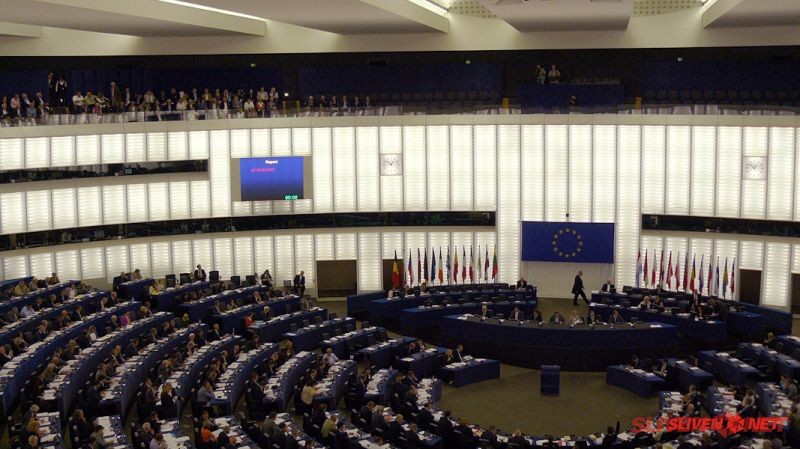
The new laws seek to boost the competitiveness of EU so-called small “mid-cap” (SMC) enterprises as they grow beyond SME status, with targeted measures.
Small mid-caps - new category of company that falls between SMEs and large enterprises
Thresholds to define small mid-caps set at 1,000 employees, €200M in turnover or €172M in total assets
New rules to promote the use of digital formats to simplify reporting requirements
The European Parliament has given its final approval to laws introducing the concept of small mid-cap enterprises (SMCs) and extending to them various exemptions that so far have been available to small and medium enterprises (SMEs). The aim is to avoid cliff-edge situations where a company’s obligations drastically increase when they grow beyond the SME threshold, and to support companies in scaling up. MEPs also support new rules to help companies, in particular SMEs and micro-enterprises, submit product compliance information digitally and introduce “common specifications”, when harmonised EU standards are not available.
Support for small mid-caps
SMCs will be defined in principle as companies with fewer than 1,000 employees; and either up to €200 million in turnover or up to €172 million in total assets (the Commission originally proposed 750 employees, €150 million in turnover and €129 million in total assets).
The new category will be introduced to the following laws, with existing SME exemptions extended to the new category:
record-keeping obligations under the General Data Protection Regulation (GDPR) when processing data that is not likely to be high-risk for the subject’s rights;
the Prospectus Regulation, allowing SMCs to access SME growth markets and benefit from simpler prospectus disclosure rules;
the Batteries Regulation, where the turnover threshold for due diligence exemptions is increased from EUR 150 million to EUR 200 million, and the frequency of public reporting is reduced;
registration requirements under the F-gases Regulation;
trade defence instruments on antidumping and anti-subsidy investigations including access to the SME and SMC Helpdesk and related procedural simplifications;
the Markets in Financial Instruments Directive (MiFID); and
the Resilience of Critical Entities Directive.
Within five years of the laws entering into force, the Commission will draft a report on the SMC threshold and its impact on the administrative burden on companies, with the possibility to review it.
Common specifications and “digital by default”
A separate agreement on digitalisation and common specifications, which was also backed by Parliament today, promotes the use of digital formats by companies related to their reporting requirements on EU product information, such as declarations of conformity, instructions, and contact details. The new rules also streamline communication between economic operators and authorities. They introduce “common specifications” that the Commission can adopt in exceptional circumstances as a legally recognised, fallback option when no harmonised standards exist, to demonstrate the compliance with EU rules of a product, device, service, process or system.