

Sliven online

Начало
Категории новини
Други категоризации
Новинарски сайтове
Източници на новини
- Бюро по труда-Сливен
- ВиК-Сливен
- ДейтаМплант
- МБАЛ "Д-р Ив.Селимински"
- МКБППМН Сливен
- Мед. център Миркович
- Митрополия Сливен
- ОУ "Е. Багряна" (XII)
- ОУ "П. Хитов" (VII)
- ОбСНВ, ПИЦ-Сливен
- Област Сливен
- Община Сливен
- Общински съвет - Сливен
- Обяви за работа – Сливен
- ПГ по Механотехника
- ПГПЗЕ "Захарий Стоянов"
- ППЗЦ - Сливен
- ПХГ "Дамян Дамянов"
- РЦИР
- Регион.Ист.Музей-Сливен
- СБР - Котел
- СУ "Й. Йовков" (X)
- Сп. "Текстил и облекло"
- Спортно у-ще "Д. Рохов"
- ТПП-Сливен
- Топлофикация-Сливен
- Туида Нюз
- ЮТРЛВК - Сливен
Търсене
Преводач
RSS
Сливен. Новини от източника. Последни новини
2027 EU budget: focus on research, connectivity and civil protection
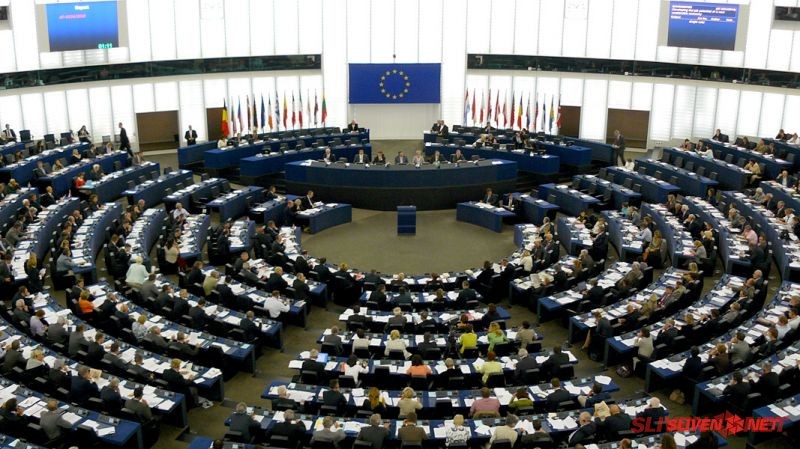
Next year’s EU budget signed into law by European Parliament’s president
Total budget for 2027 set at €199.7 billion in commitments and €211.5 billion in payments
€300 million more for key priorities such as energy and transport infrastructure, education and neighbourhood policy
On Wednesday, MEPs gave their final greenlight to the last annual budget of the 2021-2027 EU long-term budget framework.
In a deal reached on Wednesday 11 November, Parliament and member state governments agreed to set the overall level of commitment appropriations (legal promises to pay in the same year or later) at €199.7 billion, and payment appropriations (actual payments made to beneficiaries) at €211.5 billion. In commitment appropriations, this sets the 2027 budget at 0.99% of the EU’s gross national income (GNI). Parliament secured an additional €300 million for its priorities compared to the Commission’s proposal, boosting investment in research, transport and energy networks, Erasmus+, civil protection, border management, military mobility, the EU’s neighbourhood, and humanitarian aid. The deal also includes stronger cybersecurity and security capabilities for the EU institutions and delegations.
Boosting Europe’s resilience, competitiveness and global role
Key increases compared with the Commission’s proposal include €39 million for the EU’s Southern and Eastern Neighbourhood, €30 million for humanitarian aid and €30 million for border management and migration. MEPs secured more research funding through Horizon Europe with €21.5 million extra, and for transport and energy networks an additional €22.5 million. For education, the Erasmus+ programme receives an additional €14 million and the civil protection mechanism is reinforced by €13.5 million. Further increases support military mobility (€10 million), and climate and environmental action (€10 million). See the full table for funding for programmes. More details are available in this background briefing .
Repayment costs for NextGenerationEU (NGEU) and the Ukraine Support Loan
The €4.9 billion NGEU over-run costs are to be dealt with as agreed previously through a “cascade mechanism”, designed to manage the borrowing costs and protect flagship programmes. The amount allocated to servicing the Ukraine Support Loan debt is set at €650 million, in line with the Commission’s proposal. The Parliament, Council and Commission have also acknowledged in a joint statement the possibility of covering the loan’s debt service costs by mobilising the Ukraine Support Loan special instrument in 2027.
The 2027 budget was adopted by 406 votes to 184, with 69 abstentions. Council endorsed the deal on Monday.
Quotes
“The EU budget is about more than figures: it reflects our priorities and the future we want. The 2027 budget is too focused on the past. Traditional policies matter, but today's realities – the war in Ukraine, geopolitical tensions, and technological rivalry – demand new priorities. We want the EU to do more on defence, security, innovation, and energy, but the current EU long-term budget leaves us with little room to respond to these challenges. As this is the last annual budget of the current framework, let this be a moment to reflect on how we use our resources,” said the chair of the Committee on Budgets, Johan Van Overtveldt (ECR, BE).
“Next year’s budget will be the smallest in recent history. At 0.99% of the EU’s gross national income, it is even below the one per cent line demanded by the most frugal capitals. One may think that is enough to get by but it falls short of the ambition our union should aim for, especially if we want to remain one of the world's leading powers. We must not let 0.99% become a benchmark. That is why the proposed 0.97% for the next MFF is so worrying. Amid economic pressures, wars, and domestic politics across member states, reversing €1 billion in Council cuts and adding €300 million for EU programmes above the Commission's draft for 2027 is a realistic and respectable outcome,” said the general rapporteur for the EU’s 2027 budget (for section III - Commission), Nils Ušakovs (S&D, LV).
“Our institutions must be able to fulfil their responsibilities today while preparing for tomorrow's challenges, such as a changing security environment, growing geopolitical uncertainty and rapid technological change. We must protect our buildings, our people, our communications, and sensitive information to safeguard our independence and continue serving citizens effectively. We have worked to ensure that our institutions' operational needs are properly addressed, with stronger security and the capacity to respond to challenges arising from digitalisation and AI. A well-functioning EU administration is one that delivers results for citizens,” rapporteur for the other sections, Michalis Hajipantela (EPP, CY) said.
Background
More than 93% of the EU budget goes directly to EU programmes. The annual EU budget, which serves 27 countries and 450 million Europeans, is relatively small – on average €160-200 billion annually during the 2021 to 2027 period. This is comparable to the national budget of Poland, which serves 39 million people, and equivalent to 30% of the budget of Germany, which serves 84 million people. The EU budget delivers significant economic, social and political benefits despite representing approximately only 1% of the EU’s gross national income (GNI). (Source: Parliament and Commission)